
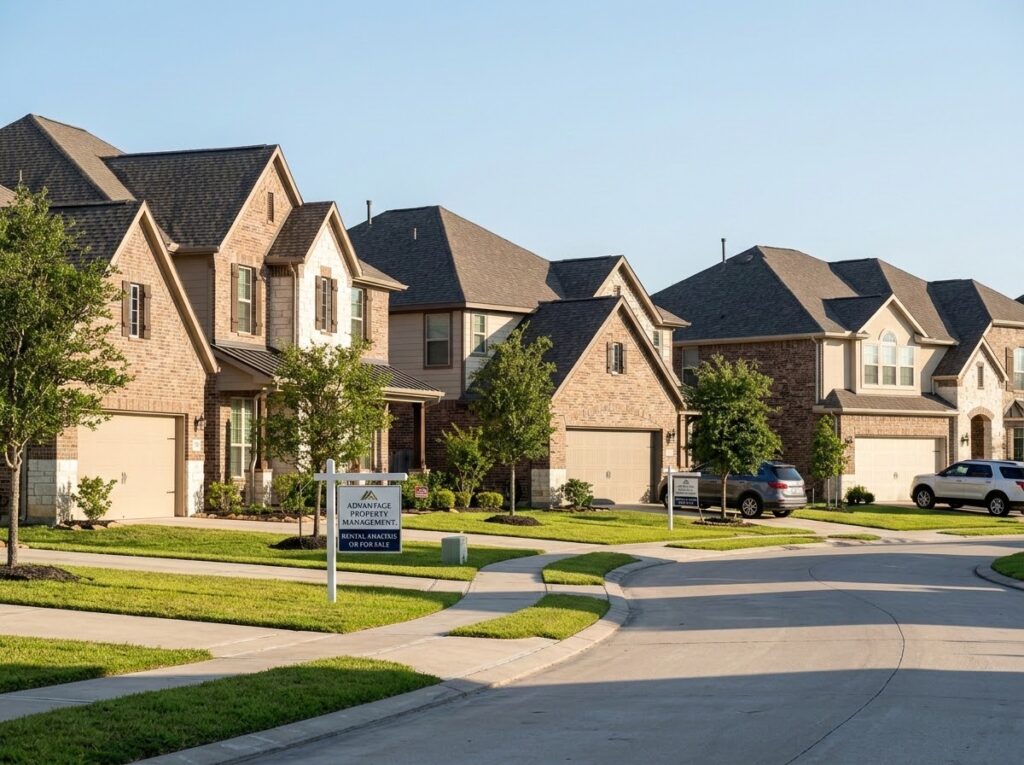
For Houston homeowners thinking about selling, the housing market just became more complicated.
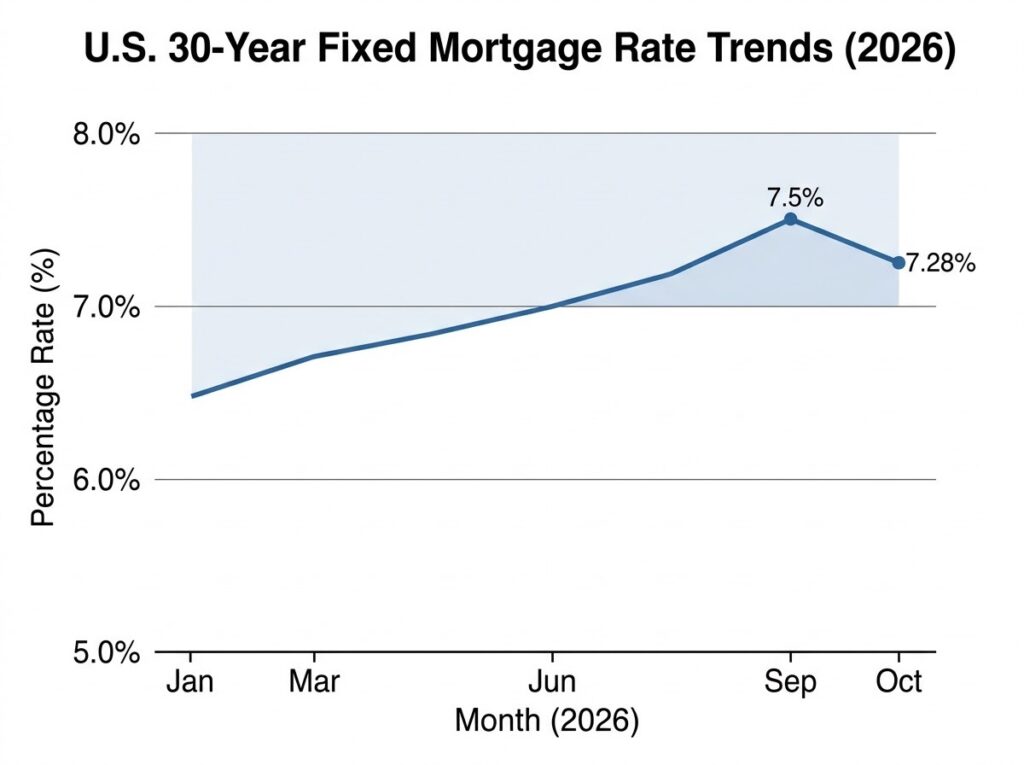
Mortgage rates have climbed sharply again. In late September 2026, the average top-tier 30-year fixed mortgage rate reached 7.5% for the first time since April 2024. By early October, daily mortgage-rate measures were around the mid-7% range, while Freddie Mac’s weekly national average for a 30-year fixed mortgage stood at 7.28%.
That is a major change from the extraordinarily low mortgage rates homeowners and buyers became accustomed to earlier this decade.
And higher mortgage rates don’t just affect people buying homes.
They affect homeowners trying to sell them.
When financing becomes more expensive, purchasing power falls. Some buyers lower their budgets. Others postpone buying altogether. Those who remain in the market frequently become more selective and more aggressive in negotiations.
For Houston homeowners considering selling a property, that raises an important question:
Does selling still make sense — or could renting the property be the better financial decision right now?
There isn’t one answer for every homeowner. But in today’s market, renting deserves a serious look before putting a home up for sale.
Mortgage Rates Have Returned to Levels We Haven’t Seen in Years
Mortgage rates moved rapidly higher during September.
Mortgage News Daily reported that its benchmark top-tier 30-year fixed mortgage rate reached 7.50% on September 28, 2026 — a level it had not reached since April 2024. Rates continued moving around the mid-7% range in the days afterward.
Freddie Mac’s broader weekly survey (Freddie Mac Primary Mortgage Market Survey) showed a 30-year fixed mortgage averaging 7.28% as of October 1, compared with 6.34% one year earlier.
The exact mortgage rate any buyer receives will depend on credit, down payment, loan type, points and other factors. But the broader trend is what matters for homeowners considering selling:
Financing a home has become significantly more expensive.
And that changes buyer behavior.
Higher Mortgage Rates Reduce What Buyers Can Afford
Most buyers don’t shop for houses based solely on purchase price.
They shop based on the monthly payment they can afford.
That payment includes principal, interest, property taxes, insurance and, in some cases, HOA fees and mortgage insurance.
When mortgage rates rise, the interest portion of that payment rises with them.
A buyer who could comfortably afford a particular home at a 5% mortgage rate may not be able to afford that same home with a rate above 7%.
That leaves buyers with several choices:
- Increase their monthly housing budget.
- Make a larger down payment.
- Purchase a less expensive house.
- Negotiate harder with the seller.
- Ask for closing-cost or rate-buydown assistance.
- Delay purchasing entirely.
Most buyers aren’t suddenly earning substantially more money simply because mortgage rates increased.
So something else has to adjust.
And frequently, that puts pressure on the seller.
Houston Sellers Are Also Facing More Competition
Interest rates aren’t the only challenge.
Houston buyers have considerably more inventory from which to choose.
According to the Houston Association of REALTORS® Market Research, active listings reached approximately 38,500 homes in September 2026, up 28.5% from the previous year. Houston had approximately 5.2 months of inventory, compared with 4.3 months one year earlier. Homes were spending approximately 55 days on the market, up from 52 days the year before.
That creates a very different environment than the highly competitive seller’s markets many homeowners remember.
A few years ago, a buyer might have been competing against several offers.
Today, that buyer may be comparing your property against five, ten or twenty alternatives.
That means sellers have to compete on:
- Price.
- Condition.
- Location.
- Incentives.
- Closing costs.
And sometimes all of the above.
Higher Rates Can Create a Housing-Market “Lock”
There is another unusual dynamic affecting today’s market.
Millions of existing homeowners financed their homes when mortgage rates were substantially lower than they are today.
Someone with a mortgage in the 3% or 4% range may be understandably reluctant to sell that home and purchase another property with a mortgage above 7%.
That can create what economists sometimes refer to as a “lock-in effect.”
The homeowner may want a larger home, a different neighborhood or a move to another city — but replacing an inexpensive mortgage with a much more expensive one changes the economics of the move.
For some homeowners, this creates another possibility:
Move — but don’t sell the existing home.
Instead, convert the current property into a rental.
That isn’t right for everyone, but it can allow a homeowner to retain an existing asset and potentially preserve attractive long-term financing rather than selling simply because they’re relocating.
Selling a Home Costs More Than the Sale Price Suggests
Another mistake homeowners make is comparing the property’s expected sale price directly with what they originally paid for it.
Your sale price isn’t your profit.
Selling a home can involve:
- Real estate commissions
- Seller-paid closing costs
- Repairs
- Inspection-related concessions
- Buyer incentives
- Mortgage payoff
- Title expenses
- Moving expenses
- Carrying costs while the property is listed
And in a slower market, carrying costs become increasingly important.
Every additional month a property remains unsold may mean another month of:
- Mortgage payments
- Property taxes
- Insurance
- HOA dues
- Utilities
- Lawn care
- Pool service
- Maintenance
Those expenses can quickly reduce the amount a homeowner ultimately walks away with after selling.
Days on Market Matter More Than Many Sellers Realize
A house sitting on the market doesn’t simply cost money.
It can change how buyers perceive the property.
Buyers can see listing history.
When a house has been available for an extended period, buyers naturally start asking questions:
- Why hasn’t it sold?
- Is something wrong with it?
- Is it overpriced?
- How motivated is the seller?
Even when there is absolutely nothing wrong with the property, longer market time can shift negotiating leverage toward the buyer.
A buyer may ask for a lower price.
They may ask the seller to pay closing costs.
They may request repairs after the inspection.
They may ask the seller to pay for a mortgage-rate buydown.
Or they may simply wait for the next price reduction.
In today’s Houston market, sellers need to account for this possibility before deciding that selling is automatically the best strategy.
The Alternative: Turn the Home Into a Rental Property
For some homeowners, the better move may be to stop thinking of the property solely as a home they need to sell and start thinking of it as an asset they already own.
Instead of:
Move → Sell → Walk Away
the strategy becomes:
Move → Rent → Hold the Asset → Reevaluate Later
This can provide several potential advantages.
1. You Don’t Have to Sell Into a Challenging Market
A homeowner does not necessarily have to accept today’s market conditions.
If the property can be rented successfully, holding it may allow time for market conditions to change.
That doesn’t mean anyone can predict when prices or interest rates will move.
It simply means selling today isn’t the only option.
You may decide to revisit the decision in one year, three years or five years.
2. Rental Income Can Offset the Cost of Ownership
A tenant’s monthly rent can help offset expenses associated with the property, including the mortgage, taxes, insurance, maintenance and management expenses.
Whether a property will produce positive cash flow depends on the individual property.
Some homes may generate meaningful monthly cash flow.
Others may roughly break even.
Others may initially require some owner contribution.
But cash flow isn’t the only component of the calculation.
3. Your Tenant May Help Pay Down Your Mortgage
If your property has a mortgage, part of each mortgage payment generally reduces the loan balance.
When rental income helps cover that payment, the tenant is indirectly helping the homeowner build equity over time.
That principal reduction is easy to overlook when evaluating a rental.
4. You Maintain Exposure to Long-Term Appreciation
Real estate markets move in cycles.
There are strong seller markets, balanced markets and buyer markets.
Holding a property allows the homeowner to continue participating in whatever long-term appreciation may occur.
Of course, appreciation is never guaranteed.
But selling is permanent.
Once the property is sold, the owner no longer participates in its future value.
5. You Preserve Future Flexibility
Perhaps one of the greatest benefits of renting instead of selling is optionality.
You can potentially sell later.
You might move back into the property.
You might keep it as a long-term investment.
You may eventually use the equity toward another investment.
Renting can give homeowners time to make that decision without forcing a sale during a difficult market.
Consider the Situation of an “Accidental Landlord”
Many rental-property owners never originally planned to become real estate investors.
They simply reached a point where selling their previous home didn’t make financial sense.
Perhaps they relocated for work.
Perhaps they purchased a larger house.
Perhaps they got married and combined households.
Perhaps they inherited a property.
Or perhaps the offers they received were simply lower than they were willing to accept.
Advantage Property Management has worked with many homeowners who became rental-property owners in exactly these situations. A significant portion of the company’s owner base historically has consisted of individual homeowners rather than large institutional investors.
The important thing is to evaluate the property based on the numbers rather than assuming you must sell simply because you are moving.
But Renting Is Not Automatically Better Than Selling
There is an important caveat.
This isn’t an argument that every homeowner should turn their home into a rental.
Sometimes selling is absolutely the right choice.
You may need the equity for your next home.
The property may not command enough rent.
The house may require significant future maintenance.
Your mortgage payment may be substantially higher than achievable rental income.
You may already have substantial equity and prefer to redeploy that capital somewhere else.
Or you simply may not want to own an investment property.
All of those can be completely valid reasons to sell.
The point is that homeowners should compare the two strategies before making the decision.
The Right Question Isn’t “What Can I Sell It For?”
A more useful analysis asks two questions.
Scenario A: What happens if I sell?
Estimate:
- Realistic selling price
- Expected days on market
- Mortgage payoff
- Realtor and transaction costs
- Necessary repairs
- Potential seller concessions
- Carrying costs until closing
- Estimated cash proceeds after everything is paid
Then compare that with:
Scenario B: What happens if I rent?
Estimate:
- Realistic monthly rent
- Expected vacancy
- Mortgage payment
- Property taxes
- Insurance
- HOA costs
- Maintenance reserve
- Property management costs
- Expected cash flow
- Principal reduction
- Longer-term ownership objectives
Now you’re comparing two financial strategies rather than simply asking whether you can sell the house.
A Home That Doesn’t Produce Large Cash Flow Can Still Make Sense to Hold
This is another area homeowners sometimes misunderstand.
Imagine a rental where the rent roughly covers the property’s expenses.
A homeowner might look at that and say:
“If I’m not making hundreds of dollars every month, why would I keep it?”
Because monthly cash flow is only one potential component of the return.
Over time, the owner may benefit from a combination of:
- Cash flow
- Mortgage principal reduction
- Potential appreciation
- Potential tax benefits
- Future rent increases
Tax treatment depends on each owner’s individual situation and should be discussed with a qualified tax professional.
But the larger point remains:
The financial return from rental property shouldn’t necessarily be judged solely by the amount of cash deposited into your bank account each month.
What If You Don’t Want to Be a Landlord?
This is one of the biggest reasons homeowners sell.
They don’t want calls about broken air conditioners.
They don’t want to collect rent.
They don’t want to chase late payments.
They don’t want to coordinate plumbers.
They don’t want to perform inspections.
They don’t want to deal with lease renewals.
And they certainly don’t want to handle an eviction.
That’s understandable.
But owning a rental property and personally managing a rental property are two different things.
A professional property manager can handle much of the day-to-day responsibility, including leasing, rent collection, maintenance coordination, tenant communication, inspections, accounting and lease management.
The objective of professional management should be to make rental-property ownership as hands-off for the homeowner as reasonably possible — handling tenant needs, maintenance and much of the financial administration associated with the property.
That changes the decision considerably.
The question becomes less:
“Do I want to become a landlord?”
and more:
“Does this property make sense for me to continue owning as an investment?”
Houston’s Current Market Makes That Analysis Particularly Important
Houston remains one of the country’s largest and most dynamic housing markets.
But today’s environment is unusual.
Homeowners are dealing simultaneously with:
- Mortgage rates above 7%
- Higher financing costs for buyers
- More homes available for sale
- Longer selling timelines
- Greater buyer negotiating power
- Seller concessions
- Elevated home prices in many areas
- Existing homeowners locked into much lower mortgage rates
That doesn’t mean Houston real estate is “bad.”
It means the decision has become more nuanced.
The market is no longer one where homeowners should assume that listing a house will produce multiple offers within days.
And that makes understanding the rental alternative increasingly important.
Before You List Your Houston Home, Run Both Scenarios
If you’re considering selling a home in Houston, Katy, Sugar Land, Richmond, Pearland, Cypress, The Woodlands, Missouri City, Tomball or elsewhere in Greater Houston, take the time to understand both options.
Ask:
What could my house realistically sell for today?
Then ask:
What could my house realistically rent for today?
Next, compare the economics.
Sometimes the answer will clearly favor selling.
Sometimes it will clearly favor renting.
And sometimes the difference will be close enough that your long-term goals become the deciding factor.
The key is making that choice with real market information rather than assuming selling is the only option.
Thinking About Selling? Find Out What Your Home Could Rent For First.
Before putting your house on the market, Advantage Property Management can help you understand what the property may rent for in today’s Greater Houston rental market.
We can evaluate comparable rental properties, local market conditions and the characteristics of your home to provide a realistic rental range.
From there, you can compare the numbers and decide whether selling now or turning the home into a rental better supports your financial goals.
Considering selling your Houston-area home? Request a free rental analysis before you list. You may have another option worth considering.
Mortgage rates and housing-market conditions change frequently. Market figures referenced in this article reflect information available in late September and early October 2026. This article is for general informational purposes and is not financial, tax or investment advice.